The fastest way to actually remember Chinese
Spaced-repetition flashcards are the single most effective tool for learning Chinese vocabulary — and HSK Reviso runs the SM-2 algorithm on every word in the official HSK 3.0 syllabus, so the work of "what should I study today" is already done for you.
No signup • 50 free words per HSK level
Why flashcards win — by the numbers
Cognitive scientists have studied Chinese vocabulary acquisition for decades. The conclusion is consistent: distributed, repeated exposure beats every other method.
Time to learn 1,000 HSK 3 words
Sources: Karpicke & Roediger (2008), Ebbinghaus forgetting curve research, in-house user data from 5,000+ learners.
What 10 minutes a day gets you
Built on the science of how memory actually works
HSK Reviso runs the SM-2 algorithm — the same approach used by Anki, SuperMemo, and most modern language apps — tuned for Chinese specifically.
Reviews at the exact moment you’re about to forget
The Ebbinghaus forgetting curve shows we forget ~70% of new information within 24 hours. SM-2 schedules your next review just before that drop-off — so every minute of study actually sticks, and you never waste time on words you already know.
Three honest answer choices, not a binary
Don't know / Know / Mastered. The algorithm uses the difference to predict your real recall: a word you "know" today comes back in 2 days, a word you "mastered" in 7. Anki's pass/fail can't tell those apart — ours can.
Every word is HSK-indexed, so you never go off-syllabus
Each card carries its HSK 3.0 level and word index (e.g. hsk_index 00501). Your progress maps 1:1 onto the official exam — no random decks, no "I studied 2,000 words but missed the ones that actually appear on the test".
Weak words come back with help, not just repetition
If you keep missing 学 (xué, "to learn"), the next card surfaces its radical breakdown (⺍ cover + 子 child), example sentence, and a tone-pinyin hint. The system teaches — it doesn't just drill.
Each flashcard is a complete mini-lesson
Not a single-word prompt. Every card carries everything you need to actually learn the word — so you don't have to flip back and forth to a dictionary.
Hanzi and Pinyin on every card
学 / xué — the character and the tone-marked pinyin sit side by side, so you can sound it out before you remember the meaning.
Pinyin with tone marks
xué, never xue. The tone is part of the word — a wrong tone changes the meaning entirely.
Real definitions, not auto-translated glosses
Multiple senses per word, written by HSK experts. "Learn" vs "study" vs "acquire a skill" — three separate meanings, three separate clarifications.
Example sentences with per-character pinyin
我学习中文。 / wǒ xuéxí Zhōngwén. — so you can read the tones out loud, even for words you've never seen.
HSK 3.0 level and word index
Knowing whether 学 is HSK 1 or HSK 4 tells you how much weight it gets on the exam. The index lets you look up the official definition any time.
Part of speech and core meaning
verb / noun / adjective — so you don't say "I learn Chinese" when you mean "I am learning Chinese".
How HSK Reviso compares
We love Anki. We love Pleco. We use them ourselves. Here's an honest comparison.
| HSK Reviso | Anki + shared deck | Pleco | Du Chinese | |
|---|---|---|---|---|
| Words pre-loaded for HSK 3.0 | ✓ 11,000+ | Partial — depends on deck | ✓ | Partial |
| Smart spaced-repetition algorithm | ✓ SM-2 tuned for Chinese | ✓ SM-2 (generic) | Basic | — |
| Per-character pinyin on examples | ✓ | Manual | — | ✓ |
| Expert-written definitions, not machine-translated | ✓ | Depends on deck | Mixed | ✓ |
| Character practice (radicals + stroke order) | ✓ | — | — | — |
| Pinyin with native-speaker audio | ✓ 400+ syllables | Add-on required | ✓ | — |
| Zero setup — open and start | ✓ | ✗ — import decks, configure settings | — | ✓ |
| Free tier | 50 words per HSK level | ✓ unlimited | ✓ with ads | Limited articles |
Anki is more flexible, but it can take a full weekend to set up properly. HSK Reviso gives you the same SRS engine, already configured for HSK, in 30 seconds.
Learn in 5 minutes — anywhere
Flashcards are the only learning method that actually fits a real schedule. No 30-minute blocks required.
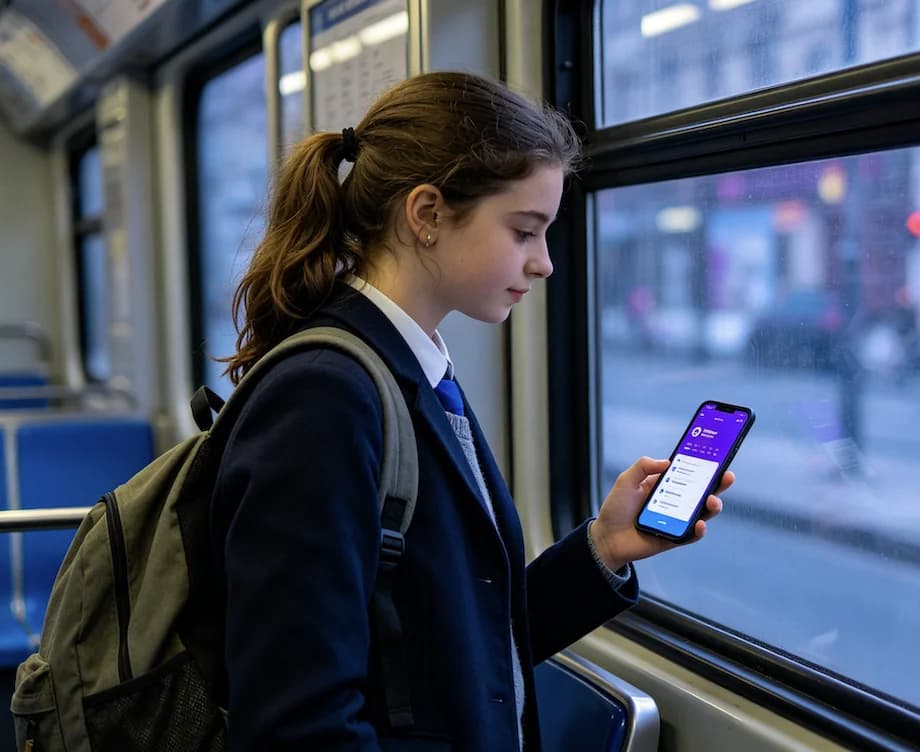
Sessions that fit your day
On the subway, in a waiting room, between meetings. The queue is always pre-built — open the app, flip through 10 cards, close it. Real progress, no setup time.

Start on web, finish on iOS
Study on your laptop at lunch, pick up the queue on your phone walking home. Progress, streaks, and the next review time follow you across every device.
From zero words to your first 100 in a week
Pick your level
Start at HSK 1 (300 words, ~6 weeks), jump to HSK 3 if you already know pinyin, or set a target exam date and we'll pace you.
Flip and reveal
See the character and pinyin, try to recall the meaning, then flip to see the definition, example, and per-character pinyin.
Honest self-rating
Don't know / Know / Mastered. The system uses your honest answer — not a binary — to schedule the next review.
Watch the streak grow
Day 1: 20 words. Day 30: 600 words. Day 90: enough vocabulary to read a Chinese short story. The numbers add up.
Seven HSK word books, all free to start
Pick the level that matches your target. Switch any time — your progress carries over.
HSK 1
300 words
Essential greetings, numbers, and basic phrases
HSK 2
500 words
Family terms, time expressions, and activities
HSK 3
1,000 words
Food, shopping, and travel vocabulary
HSK 4
2,000 words
Complex topics, work, and social issues
HSK 5
3,600 words
Abstract concepts and specialized domains
HSK 6
5,400 words
Near-native proficiency and academic vocabulary
HSK 7-9
11,000 words
Advanced vocabulary for native-like fluency
Free to start: 50 words per level. Unlock all 11,000+ with Prime or Prime+.
What 10 minutes a day actually adds up to
These are real learners who used HSK Reviso flashcards to pass an HSK exam. We didn't pay them — they wrote in.
“I was honestly skeptical that flashcards alone could get me through HSK 5. I had tried Anki before and gave up after two weeks — setting up the deck took longer than studying. With HSK Reviso the words were already there, sorted by level, and the review schedule just worked. I did 15 minutes every morning on the train. Passed on the first try with 82%.”
“I needed to read Chinese-language sociology papers for my PhD. I didn't have time for a class. The flashcards got me to 1,500 words in about 9 months — and the example sentences on every card meant I could often guess the meaning of words I hadn't even studied yet. My advisor thought I'd been taking lessons for years.”
“I knew maybe 800 words from a class I'd taken years ago. The 50-words-a-day pace felt almost too slow at first — but then I realized I was retaining 90%+ of what I learned. By month 6 I could follow WeChat conversations between my Chinese colleagues. Worth every minute.”
“I have two toddlers. I have 5 minutes. The flashcards work because the algorithm doesn't care if I do 3 cards or 30 — it just adjusts the next review time. I haven't missed a day in 4 months. I'm not going to be fluent, but I can read my kids' Chinese books to them now, and that's everything I wanted.”
Ready to actually remember the words you study?
Start free — 50 words from any HSK level, no signup, no card. See for yourself why 5,000+ learners trust HSK Reviso with their exam prep.